Portable toilets are easy to deal with as a final line product. A person orders sufficient systems, chooses a shipment area, and proceeds to vehicle parking, food, secure fencing, or the following subcontractor. That is usually where problem begins. Ease of access does not sit off sideways as a politeness attribute. It becomes part of whether the toilet setup is useful in any way for many individuals attending an occasion, going to a site, or moving with a short-term space.
I have actually seen this play out in extremely normal ways. A planner gets an ada portable toilet yet puts it on soft ground after a rain. A professional orders the right matter of units but leaves the accessible one boxed in behind barricades. An event supervisor thinks that due to the fact that the bigger unit got here, the job is done. Theoretically, each of those teams might really feel near to compliance. In practice, they have missed the point that accessibility depends upon the course, the entryway, the clearances, the recognition, and the fundamental capacity to reach and utilize the system with dignity.
If you are setting up an ada mobile toilet leasing, one of the most essential point is to think past the label on the door. A certified leasing is not simply a larger box. It is a short-lived facility that still needs to fulfill real ease of access requirements.
The government standard that matters
For mobile toilet rentals in the USA, the controlling government availability standard is the 2010 ADA Criteria for Accessible Style, as translated by the Accessibility Board and the Department of Justice. That matters since people usually rely on behavior, supplier shorthand, or obsolete assumptions. Words "mobility device easily accessible" in a sales conversation are not the same as actual ADA compliance.
The legal structure is not abstract. It informs you that momentary setups still have ease of access obligations. If you are dealing with mobile single-user systems grouped with each other in a cluster, the scoping regulation is especially important. At least 5 percent of the systems in each cluster have to come, and that concept applies also at temporary events.
That solitary factor cleans up a lot of confusion. Occasion organizers occasionally think access demands loosen up because the setup is only there for a weekend break. They do not. Short-lived does not indicate optional.
The 5 percent policy is basic, yet individuals still misapply it
The scoping need seems simple, yet this is where numerous rental orders drop off training course. If you produce a collection of portable single-user toilet systems, a minimum of 5 percent of that collection must come. The crucial phrase is "in each cluster." That indicates ease of access is not handled by putting one obtainable system somewhere else on the residential property and treating it as coverage for every single washroom bank.
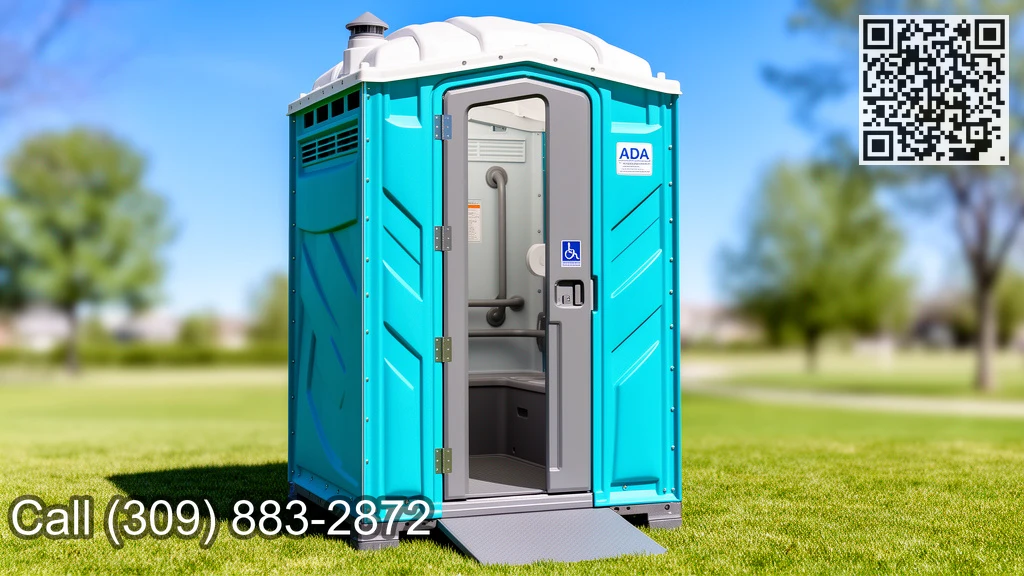
This matters on big sites. If an outside show has toilet locations near the entry, near the food court, and near a VIP area, the accessible-unit count needs to be thought about at the collection degree, not just in a total sitewide count. The sensible reason is obvious. A person must not need to take a trip throughout the premises because the only ada compliant portable commode was put in a various zone.
When the math produces a fraction, planners should not get cute about rounding down in spirit. The much safer, a lot more considerate method is to make sure the collection actually includes the required easily accessible existence. Availability is among those areas where treating the minimum as a puzzle to address normally results in poor positioning and dissatisfied users.
An easily accessible portable washroom has to be identified
Another factor that gets neglected is signage. Easily accessible portable bathroom units need to be related to the International Sign of Availability. This is not attractive. It helps individuals discover the correct center without having to examine every door in a row or ask for help.
That might appear small until you visualize a congested fairground at dusk or a jobsite with dust, equipment, and aesthetic clutter. An appropriately significant ada handicap available portable toilet decreases unpredictability and quicken gain access to. It also signals to staff and security teams that the system serves a details function and needs to not be blocked with materials, trash, secure fencing, or parked carts.
I have seen accessible devices end up being informal storage area because they are larger. That is not a harmless ease. A visibly identified device is still only useful if the configuration around it values what that symbol means.
The path to the toilet becomes part of compliance
This is where many or else sympathetic configurations stop working. Mobile easily accessible devices have to have an available path and entrance. If ramps or landings are required, those features additionally have to comply with the ADA technical requirements.
That suggests compliance does not begin at the limit. It starts where a person starts approaching the unit. If the course is obstructed, unsteady, sloppy, steep, or disrupted by momentary barriers, the obtainable restroom may be functionally not available also if the unit itself is technically the appropriate model.
This is just one of the most essential judgment calls in the area. A washroom supplier might provide an ada accessible mobile restroom that is suitable by itself, but the website host still regulates positioning. If the host selects a place across deep crushed rock, behind a lip in the pavement, or past a slim chicane of crowd-control secure fencing, the real-world result can be noncompliant and unusable.
The path problem becomes a lot more essential on temporary occasion grounds since surface areas change quick. A completely dry grassy path on Friday can become rutted and soft by Saturday mid-day. Deliveries, generators, and foot traffic can modify accessibility after installment. The lesson is easy: access must be inspected once more after the devices are set and again as the site starts operating.
Inside the system, technological needs still apply
The Access Board support explains that mobile units should meet toilet-room technical demands, consisting of component clearances, turning area, and door maneuvering clearances, plus relevant grab-bar and water-closet clearance rules.
That sentence lugs a great deal of weight. It tells you that an ada certified accessible mobile washroom is not certified simply due to the fact that it is larger than a basic unit. Interior usage matters. Individuals require enough room to go into, maneuver, placement themselves, and make use of the components with the support features the criteria require.
It is worth stopping briefly here because this is where advertising and marketing language usually gets slippery. Suppliers may advertise an ada mobile bathroom, an ada-compliant mobile commode, or ada compliant mobile restrooms in broad terms. Those phrases work just if the actual device provided aligns with the technical needs. A bigger covering without the best clearances or interior functions is not a real substitute.
I stay clear of acting that every organizer requires to remember technical dimensions. A lot of do not. However they do need to understand what to validate with the vendor and what to examine on arrival. The broad compliance groups are not optional information. Transforming area, clearances, and navigating space are the distinction in between access in theory and accessibility in practice.
Why positioning errors occur so often
A lot of placement errors come from functional pressure, okay intent. Teams are trying to stabilize vehicle access, pump-out accessibility, aesthetics, crowd circulation, and available room. The available system, due to the fact that it is often larger, obtains pressed to the margins. It might be positioned where the delivery truck can dump it fastest, where there is leftover area behind a tent, or where it "won't be in the means."
That reaction typically produces a bad outcome. The very best location for an ada certified portable toilet is not the last open port. It is an area people can in fact get to and make use of without unique aid. In some cases that implies giving up a cleaner sightline or shifting a barricade run. Sometimes it indicates considering drain before the system shows up. Those are wise trade-offs. Availability usually gets much easier when it is part of the first website plan as opposed to a correction after setup.
Another usual problem is separating the easily accessible system too much from the various other washrooms. Individuals do this with great objectives, presuming additional area around it will help. Occasionally it does. Often it leaves the customer separated in a much less noticeable, much less convenient, or less safe-feeling area. Access should support equal usage, not produce a side path unless website restraints absolutely need it.
The construction-site exemption requires cautious handling
There is an essential subtlety in the requirements background that people occasionally exhaust. The ADA Requirements distinguish mobile bathroom systems at building and construction websites utilized solely by building personnel, which are excluded from the portable-toilet accessibility scoping demand in the mentioned 1991 criterion. That does not create a covering exemption for every single mobile bathroom at every construction-related location, and it does not erase the accessible-unit need for basic portable bathroom rentals.
This distinction matters since it is easy for project teams to listen to "building and construction site" and quit the analysis there. The actual context issues. If you are organizing mobile toilets for the public, visitors, or event guests, the accessible-unit demand remains relevant. The exemption language should not be made use of as a faster way to prevent planning available service where the public is involved.
That is just one of those side situations where a fast discussion can save a lot of difficulty. Ask who will certainly utilize the devices, whether the configuration is exclusively for building employees, and whether the leasing is part of a general-access environment. Those concerns are much much better than counting on presumptions connected to the job type.
What tenants must verify prior to delivery
If you are placing an order for ada certified portable bathrooms, a brief confirmation step can protect against expensive reshuffling later. The goal is not to come to be a code professional over night. The goal is to ask sufficient of the best concerns that the provided configuration has a sporting chance of meeting the requirements.
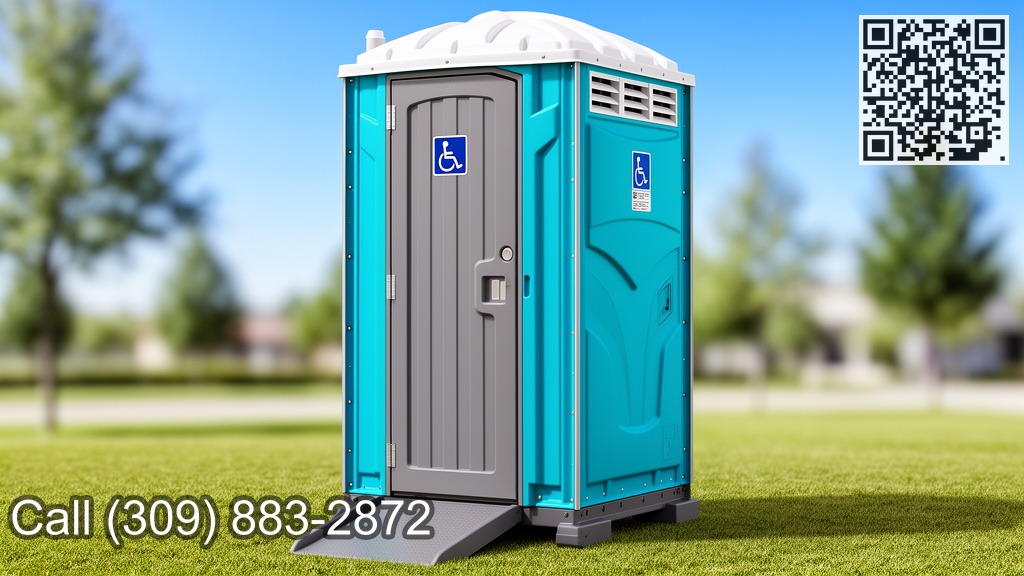
- Confirm the number of systems will remain in each collection and make certain a minimum of 5 percent of each collection will be accessible. Confirm that the accessible systems will certainly be related to the International Symbol of Accessibility. Confirm where the obtainable path will certainly start and whether ramps or landings will be needed. Confirm that the system supplied is intended to meet the suitable ADA technical requirements for commode rooms. Confirm the last placement after delivery, not just the order type before delivery.
That five-point check captures much of the failures I see usually. None of it is attractive, but it is sensible and respectful.
Temporary events are entitled to the same seriousness as long-term spaces
There is a persistent misconception that pop-up occasions get a pass due to the fact that they are short-lived, crowded, and logistically messy. The requirements do not sustain that perspective. The Accessibility Board advice especially applies the 5 percent accessible-unit guideline to temporary events. That should resolve the matter for fairs, races, events, seasonal tourist attractions, and public celebrations of every kind.
The deeper factor is human, not just lawful. Short-term events are where people are commonly strolling cross countries, standing in lines, navigating unfamiliar terrain, and counting heavily on clear wayfinding. Washroom access matters a lot more because atmosphere, not less.
https://pristineportablesil.com/gallery/An excellent occasion strategy treats the ada mobile bathroom as component of visitor experience and risk administration at the very same time. If the available system is as well far, hard to recognize, or difficult to strategy in a wheelchair or other mobility tool, the failing is immediate and visible. Individuals remember it. Personnel spend the rest of the day improvisating around an issue that must have been resolved before entrances opened.
Compliance is wider than one restroom unit
There is additionally a bigger context worth taking note of. Access enforcement is not stalling. In April 2026, the Division of Justice issued support extending the deadline for state and city government internet and mobile ease of access policies to April 26, 2027 for larger entities. That support has to do with digital accessibility, not mobile bathrooms. Still, it reflects something vital: ADA compliance is energetic across sectors, and companies are being asked to pay closer focus to access in numerous forms.
For any individual taking care of physical site procedures, this more comprehensive environment needs to be a signal. Access is progressively viewed as a full operational duty, not a box to tick in one division. A team that takes care concerning on the internet gain access to yet informal concerning an ada-compliant portable bathroom on the ground is not really assuming holistically. The exact same is true in reverse.
Common judgment calls that are worthy of extra care
Not every trouble comes with a bright red flag. Some of the hardest problems sit in grey locations of preparation and execution. That is why experience matters.
A collection might technically consist of the ideal variety of ada certified portable bathrooms, yet still leave one side of a huge location underserved. A course may appear easily accessible during arrangement, after that break down after climate or hefty usage. A supplier may precisely supply an ada obtainable mobile restroom, while the host weakens conformity by fencing it off also tightly. None of those scenarios is resolved by indicating the acquisition order.
The finest operators review the arrangement via the eyes of the person who really requires it. Can they find the unit without assistance? Can they get to it on the readily available surface? Can they open and use it with the room offered? Is the system functioning as intended, or has bordering site task endangered accessibility? Those concerns sound basic, but they are commonly what separate an expert arrangement from a performative one.
When "ADA accessible" language gets fuzzy
The rental market makes use of numerous phrases mutually: ada mobile commode, ada mobile bathroom, ada compliant portable washroom, ada-compliant portable toilets, and comparable variants. From a writing and sales standpoint, that is understandable. From a conformity perspective, it can blur crucial distinctions.
What issues is not the phrase itself but whether the delivered unit and its positioning line up with the controling criteria. A sales representative might suggest "this is our larger device." A site supervisor may hear "this unit pleases everything." Those are not the exact same declaration. If there is one behavior worth developing, it is to ask what exactly is being provided and exactly how the website conditions will support access.
That is especially real when several parties are included. The rental firm regulates inventory. The event organizer controls layout. The property owner might regulate the grounds. A basic contractor may regulate staging. Availability typically fails the spaces between them. Clear tasks help. A person needs to possess the count, the course, the identification, and the last functional problem of the setup.
A sensible standard for obtaining it right
The cleanest way to think of an ada handicap accessible mobile restroom is this: an individual must be able to locate it, reach it, enter it, maneuver inside it, and utilize it without dealing with obstacles created by the short-term nature of the site.
That standard is much more sensible than legalistic, however it tracks the compliance points that matter. The unit needs to be part of the right matter in each cluster. It has to be determined. It needs to rest on an obtainable route and have an obtainable entrance. If ramps or touchdowns are needed, those components have to comply also. Inside, the technical needs for toilet rooms still apply, including the necessary clearances and steering space.
If you maintain those essentials in sight, the remainder of the decision-making obtains clearer. You quit dealing with the easily accessible system as a specialized add-on and begin treating it as a core functional need. That shift typically boosts the whole bathroom strategy, due to the fact that once groups assume very carefully about route, positioning, and functionality, every customer benefits.
The configurations individuals bear in mind for the right reasons
The best mobile toilet plans are practically unnoticeable. Guests and workers do not quit to appreciate them. They simply function. Individuals locate the toilets quickly, transfer to them without inconvenience, and utilize them without needing to request supports. That is what success appears like in this edge of website planning.
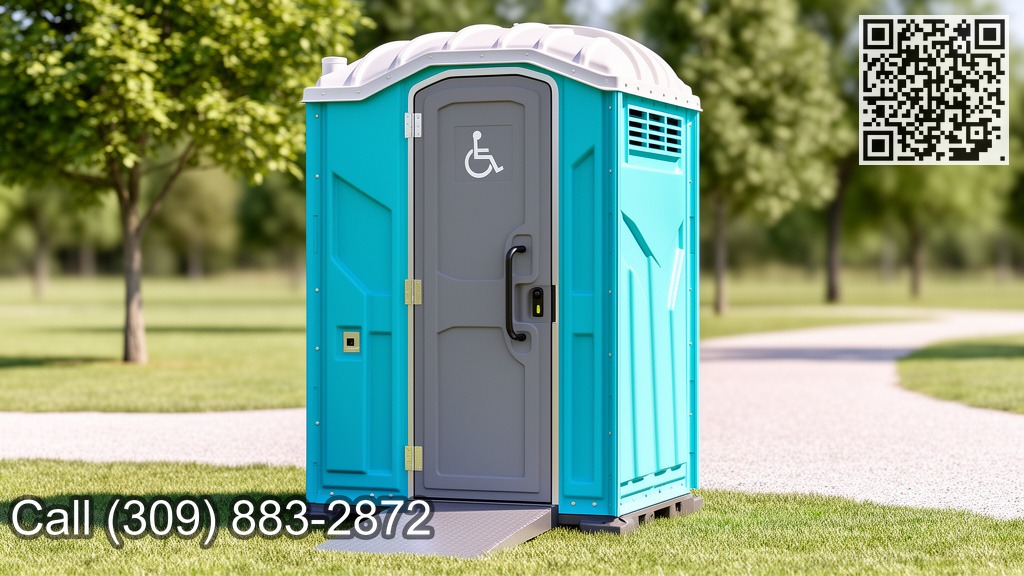
An ada portable commode rental done well shows treatment prior to any individual shows up. It shows up in the matter, the map, the ground problems, the signage, and the final walkthrough. It also lionizes. Not performative regard, not conformity language on a contract, but the useful kind that lets an individual utilize the very same event or facility with much less friction and more independence.
That is the real typical worth going for, whether you are purchasing one ada compliant portable commode for a small event or coordinating multiple clusters of ada certified available portable toilets across a big short-term website. Compliance starts with the rulebook, but it is successful in the details people in fact encounter.
 Ask ChatGPT
 Ask Grok
 Ask Perplexity
 Ask Claude
 Ask Google AI
 Ask You